 Health Finance Hubs
Affordable financial protection against health shocks
Health Finance works with financial institutions to design and deliver products that allow low-income families to access healthcare when they need it without being pushed deeper into poverty. Health Finance Hubs provide health financial products including emergency medical loans, health savings accounts and community insurance, along with health education, care navigation and basic primary care. Products are co-designed with each local partner and the low-income communities they serve.
The dual crisis: cost of care, and no affordable way to pay for it
Around 1.6 billion people are pushed into poverty, or deeper into poverty, by out-of-pocket healthcare costs every year (WHO, 2022 data). In the communities where Health Finance works, a health crisis can take many forms: a complicated childbirth, a child's serious illness, an accident, or a chronic condition that worsened because earlier care was delayed through lack of knowledge, access or affordability. Each carries a financial cost that most low-income families have no way to absorb.
Families face a dual crisis when a health emergency occurs: the direct cost of treatment, and the absence of any affordable way to pay for it. Formal health insurance is largely inaccessible for low-income households. Research by Health Finance's local partner Uplift with nearly 39,000 low-income households in Mumbai found that less than 1% had any form of health insurance coverage. Public insurance schemes exist but coverage gaps are significant, and claims processes frequently exclude those with low literacy or irregular incomes.
Savings are low and unstable. The easiest alternative is borrowing from informal moneylenders at interest rates of up to 200%, but a loan at 200% just means the health crisis becomes a financial crisis, pushing families into a debt cycle that lasts for years.
Part of the challenge is cultural as well as structural. In communities where affordable health financial products have never existed, there is little tradition of saving for health or insuring against medical risk. Families manage illness reactively, meeting costs as they arise rather than protecting against them in advance. Shifting that pattern toward prevention and financial planning is a gradual process, requiring sustained community engagement alongside the financial products themselves.
The consequences of the current system extend beyond finances. Families delay or avoid care until conditions worsen, sell productive assets, or withdraw daughters from school to cover costs. For women, who typically manage family health while having less control over household finances, a single health emergency can reverse years of economic progress.
Health education is part of the answer. When women gain the knowledge to recognise warning signs and seek care earlier, outcomes improve. But knowledge alone is insufficient without affordable financial tools to act on it. A woman who knows she needs care, and cannot pay for it, faces a different version of the same crisis. The Health Finance Hub model addresses both: integrating health education alongside health financial products, so that knowledge and the means to act on it reach families together.
of low-income households in Mumbai had any health insurance coverage (Uplift research, nearly 39,000 households)
informal moneylender interest rates faced by families without affordable alternatives
reduction in out-of-pocket healthcare expenditure for Health Finance Hub members (2025)
A community-embedded platform integrating health education, financial products and care navigation
What is a Health Finance Hub?
A Health Finance Hub is a community-embedded platform – similar in structure to a microfinance branch – that integrates health education, health financial products, basic primary care and care navigation to reduce distress financing: the high-cost borrowing and asset sales families otherwise turn to in a health emergency. Hubs are developed with local financial institution partners and designed to become operationally self-sustaining within around five years.
Emergency Medical Loans
Unsecured, low-interest loans designed specifically for health needs, rather than income-generating activities. They fill a gap mainstream microfinance does not address: most microfinance institutions will not lend for health, treating it as too high-risk given clients work in the informal sector without a guaranteed payslip.
Loans are processed within one to two days. The most common uses are childbirth (approximately one-third of loans), hospitalisation and urgent treatment. A unique underwriting process – credit check, medical verification, household visit and financial literacy training – manages risk while ensuring borrowers have what they need to manage repayment.
The average loan size is currently around A$400-460. All health loans are also bundled with mutual health insurance. To date the program has seen a 99% repayment rate (2025), confirming that health loans for low-income households are viable at appropriate interest rates.

Health Savings Accounts and Maternity Wallets
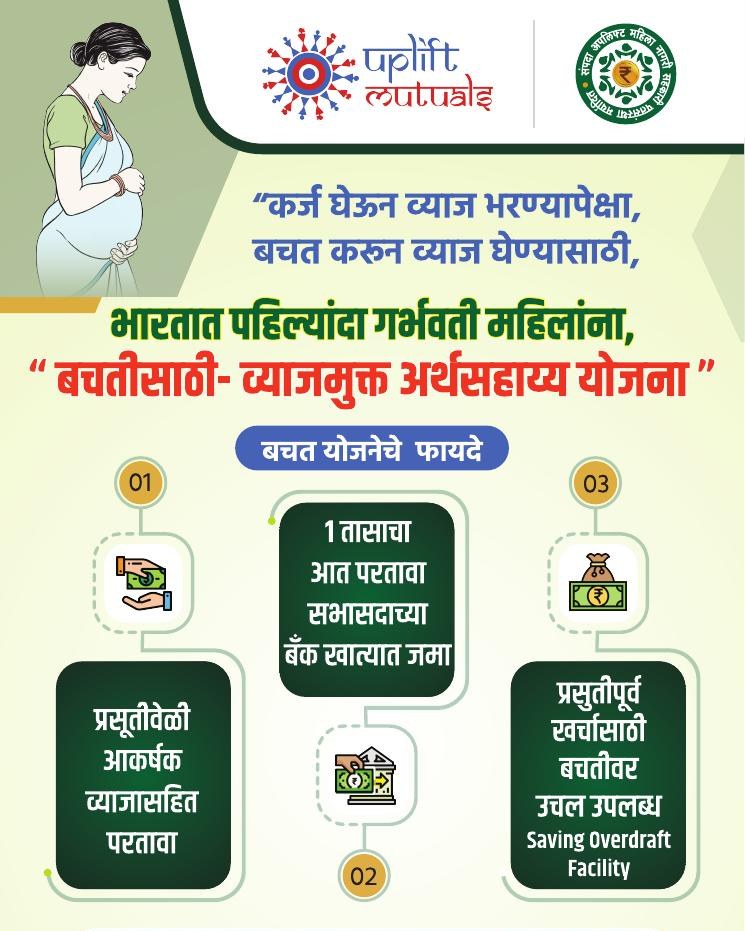
Health savings products support families to plan and save for predictable health costs, most importantly childbirth. Maternity wallets are commitment savings accounts with structured check-in milestones linked to antenatal visits, supporting both savings behaviour and health engagement simultaneously.
Women who save through the maternity wallet also receive a preferential interest rate on emergency loans if they need them, linking savings behaviour to access to affordable credit.
To date 100% of health savings accounts are held by women (2025). In contexts where women have limited financial decision-making power, the savings product gives them direct control over funds set aside for their and their children's health.

Community Mutual Health Insurance
Community-governed insurance designed with direct community input. Members set terms during the product development phase; an elected community committee makes decisions on contested claims; surplus funds are allocated at annual general meetings. This governance structure builds transparency and community ownership into the product.
Insurance starts at approximately A$11 per year when bundled with other products. The current hubs have a women-led claims committee and member-directed surplus at AGM. The products are built around mutual accountability rather than commercial indemnification.
While demand for emergency loans remains high, the long-term design intent is to shift families from reactive borrowing toward planned savings and insurance. Health education plays a central role in this transition – helping communities understand health risk, plan for predictable costs like childbirth, and build the habit of financial protection before a crisis occurs. Loans remain available as a safety net; savings and insurance are the destination.
Health Education, Financial Literacy, Triage and Care Navigation
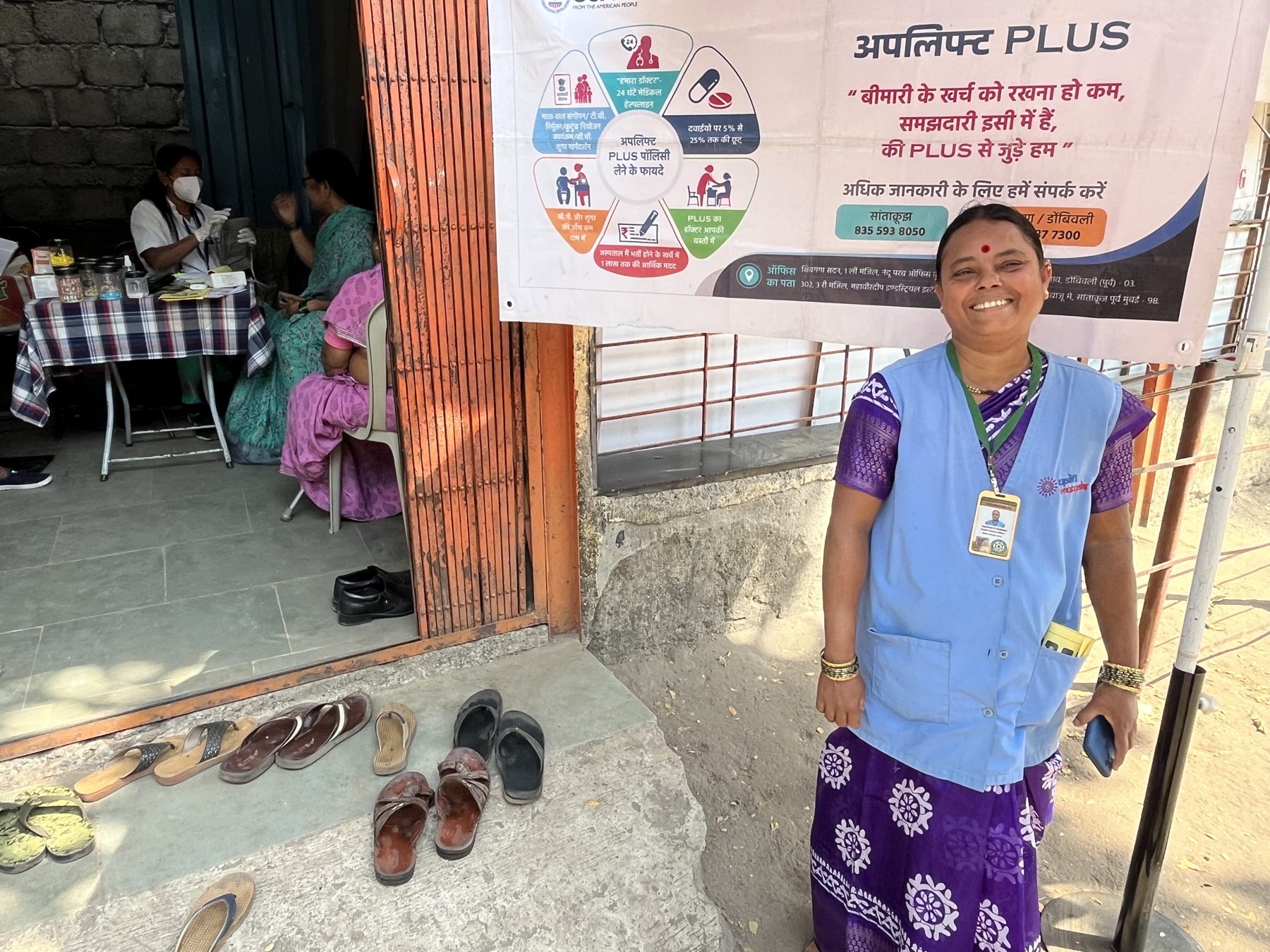
Health Leaders at the Hub provide health education and triage, including screening such as blood pressure monitoring, helping community members understand whether and where to seek care. This brings the preventative and community health education component of the model directly into the Hub.
Teleconsultation services connect Hub members with qualified doctors, reducing the cost and distance barrier to medical advice without requiring a dedicated clinic.
Care navigation supports families to understand treatment options, access government entitlements and navigate referral pathways, addressing the gap between formal entitlements and actual access for low-income families, and reducing unnecessary costs for the families that can least afford them. Uplift also actively promotes savings and insurance through health and financial education.
Results from Health Finance Hubs in India
The Health Finance Hub model has been operational since 2023. Four hubs are currently running in Mumbai and Pune, Maharashtra, India.
Emergency Medical Loans issued in 2025
reduction in out-of-pocket healthcare expenditure for participating families (2025)
of Health Savings Accounts held by women (2025)
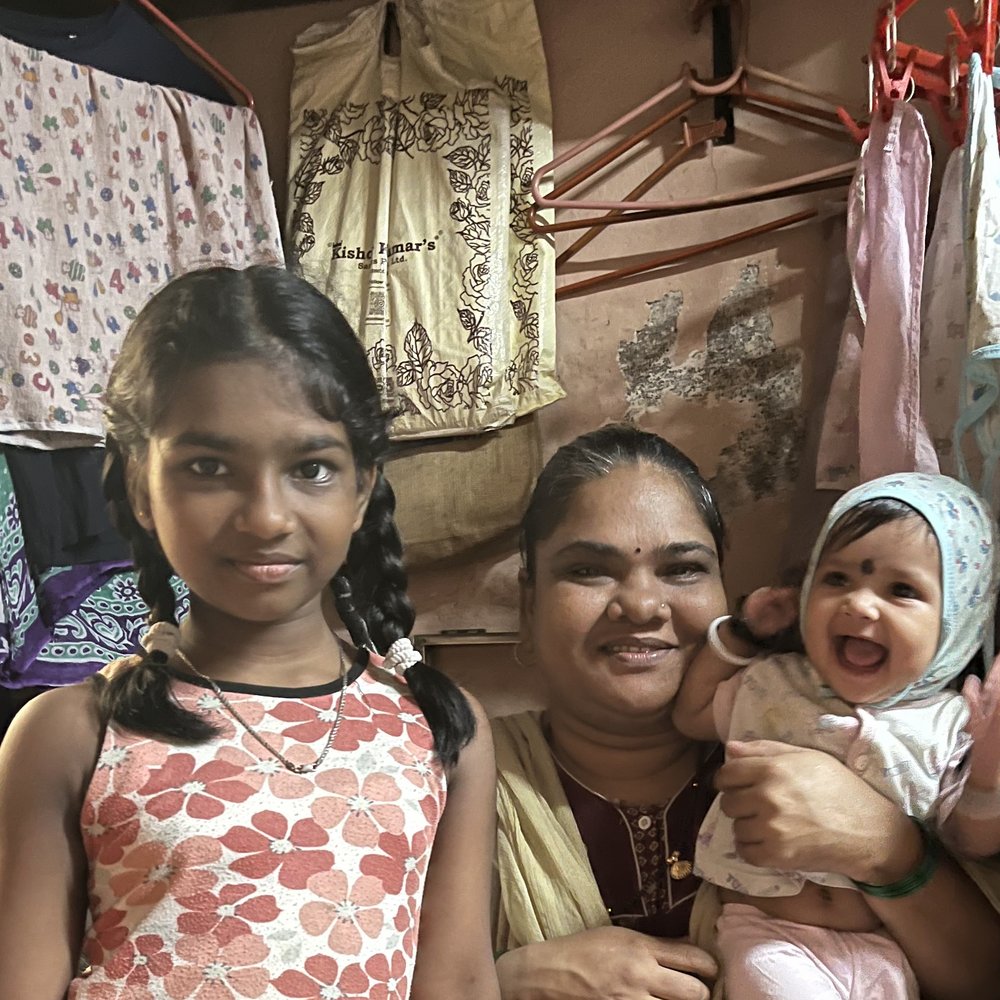
“If any emergency comes, any needs come, it's important to have savings.”
Designed to operate without ongoing grant funding within five years
Revenue from emergency medical loans, even at highly affordable interest rates, is sufficient at scale to cover the cost of delivering insurance, savings, care navigation and health education services. Grant funding establishes each hub and builds the loan portfolio to the level at which earned income covers operations.
Current demand for emergency medical loans is strong, providing a growing earned revenue base. Over time, as health financial literacy increases and savings and insurance membership grows, the product mix shifts toward lower-cost, higher-margin instruments, reinforcing rather than undermining long-term sustainability.
As the loan portfolio matures and repayment performance is demonstrated, the Health Finance Hub model is structured to attract capital beyond grants. Social investors, development finance institutions, and community lenders can provide affordable debt to fund loan portfolio growth, mobilised by the evidence of a proven, low-risk model. Grant funding establishes the hub and de-risks the early stage; earned revenue and external capital sustain and scale it. This pathway toward blended finance is built into the model from the outset.
Years 1-2: Establishment
Grant funding establishes the hub, builds the team, and launches the loan portfolio. Local partner co-invests at 20-40% of costs from day one. Products are designed with community input and tested against real client needs.
Years 2-4: Growth
Loan portfolio grows. Earned interest income increases. Partner's financial contribution rises. Grant funding share reduces as earned revenue covers progressively more operating costs. Membership in insurance and savings products grows steadily.
Years 5+: Self-sustaining
Earned revenue from the loan portfolio covers all operating costs. No ongoing grant subsidy required. Local partner owns and operates the hub as a permanent, self-funding service for its community, scaling further from its own resources.
Beyond the India pilot, Health Finance and Uplift are developing standardised implementation toolkits and evidence documentation to enable the model to be adopted by other financial institutions, both within India and in other geographies where Health Finance has financial institution partners.
Active hubs – India
Four Health Finance Hubs are currently operational in urban slum communities in Mumbai and Pune, Maharashtra, India. Programs are implemented with local partner Uplift.
There is strong interest from financial inclusion partners across the network, including in Bangladesh and Uganda, to replicate the Health Finance Hub model in their local context.
The Health Finance Hub model demonstrates that health financial protection for low-income communities is both viable and sustainable. We welcome conversations with partners interested in scaling this model.
Contact