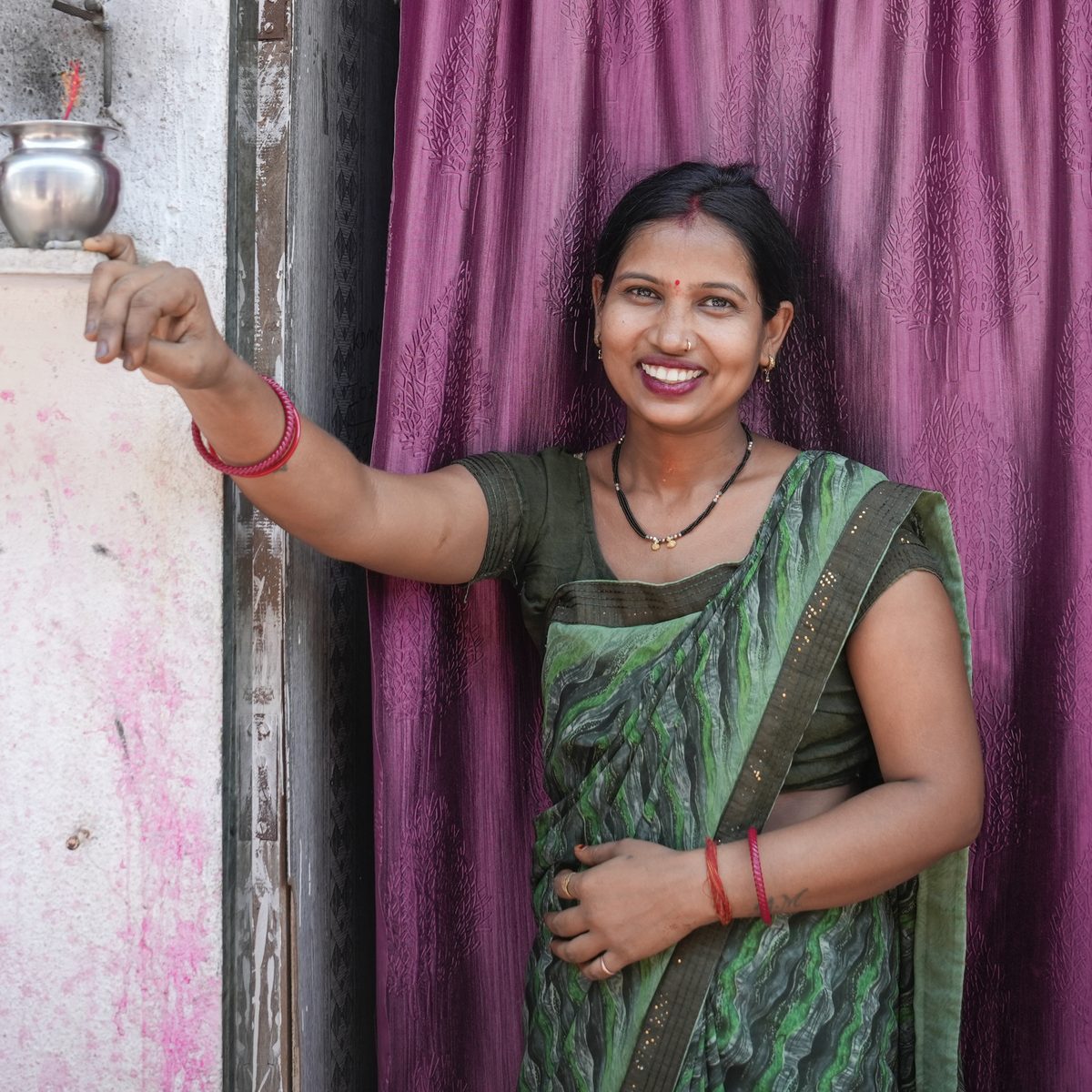
Health is her main asset
For low-income women, the healthcare they need is often unaffordable: whether it's a safe birth, treating a child's unexplained fever, or simply staying on top of her own health. Around 1.6 billion people are pushed into or deeper into poverty by out-of-pocket health costs every year, often for conditions that are easy to prevent and treat through affordable primary care. That's why Opportunity Health Finance works with local financial institutions to make quality healthcare accessible and affordable, protecting the livelihoods that women and families have built and preventing avoidable health crises from pushing them back into poverty.
people reached to date through the Health Finance program
countries: Bangladesh, India, Indonesia, Malawi and Nepal
average increase in maternal health knowledge among people participating in the Health Leaders program
of participants are women and girls
Health is the number one reason people fall back into poverty
Our work to end poverty is incomplete without health.
An estimated ninety per cent of universal health coverage is deliverable through primary care. Yet global aid funding flows predominantly to individual disease programs and hospital-based care, leaving the most cost-effective route to better health chronically underfunded. And the overall pool is shrinking: development assistance for health fell more than 20% in 2025 to a 15-year low (IHME, 2025).
Primary and preventive healthcare – the most cost-effective route to universal health coverage – receives a fraction of what the evidence demands. The economic case for redirecting that investment is well established: prevention and primary care consistently avoid or delay far more costly secondary and tertiary episodes, yet low-income countries currently need to at least double their primary healthcare spending just to deliver essential services.
For women living in poverty, the gap is acute. Women face compounded barriers – economic, physical and cultural – to accessing even basic care. They are disproportionately responsible for managing family health while having the least financial protection when illness strikes. Families often use available government preventive services late or not at all, then pay for emergencies through high-cost borrowing or asset sales. Family health expenses are consistently cited as a leading cause of loan defaults among microfinance clients, confirming the direct link between health shocks and financial vulnerability.
Primary care in low-income communities is delivered predominantly by private providers: medicine shops, small clinics, community pharmacies. Yet health policy and public funding treat primary care as a public sector responsibility, leaving those providers largely unsupported, under-resourced, and without access to capital. A public-sector-only approach cannot deliver universal health coverage when most primary care is already in private hands.
In financial inclusion, health remains largely unaddressed. Most financial institutions consider health financing as too complex or high-risk to develop dedicated products for. The result is a shortage of savings accounts, emergency loans, and insurance products designed around the real health needs of low-income women, and almost nothing tailored to the small health enterprises already serving these communities. Primary and preventive care falls between health aid, concentrated in disease-specific programs, and financial inclusion capital, which mainly finances income-generating credit.
people pushed into or deeper into poverty by healthcare costs every year – most of it preventable through affordable primary care (WHO, 2022 data)
reduction in out-of-pocket healthcare expenditure for Health Finance Hub participants – showing affordable financial tools can materially reduce catastrophic health spending
average increase in health knowledge across six topic areas among people participating in the Health Leaders program – demonstrating the effectiveness of community-led health education
Why integrate health with financial inclusion?
Health Finance works at the intersection of health and financial inclusion, integrating health programs into the financial institutions and community relationships that low-income women already trust. The model responds to the full spectrum of needs that women and families have voiced: knowledge and skills at the household level (Health Leaders), stronger and more accessible care at the community level (Health Entrepreneurs), and financial products that protect the livelihoods they have built (Health Finance Hubs).
Women are at the centre of this model by design. Health Finance integrates health into the financial inclusion relationships women already have – savings groups, microfinance, insurance – because health and financial security cannot be addressed in isolation. Each reinforces the other. The model benefits families and communities as a whole, and is designed around the needs, voices and leadership of women.
The evidence for integrated approaches is growing. A systematic review of 35 integrated microfinance and health programs across 17 countries found that health education and promotion delivered through microfinance networks consistently improved health knowledge and behaviours – and that combined programs outperformed either component alone (Lorenzzetti et al., 2017, Health Policy and Planning).

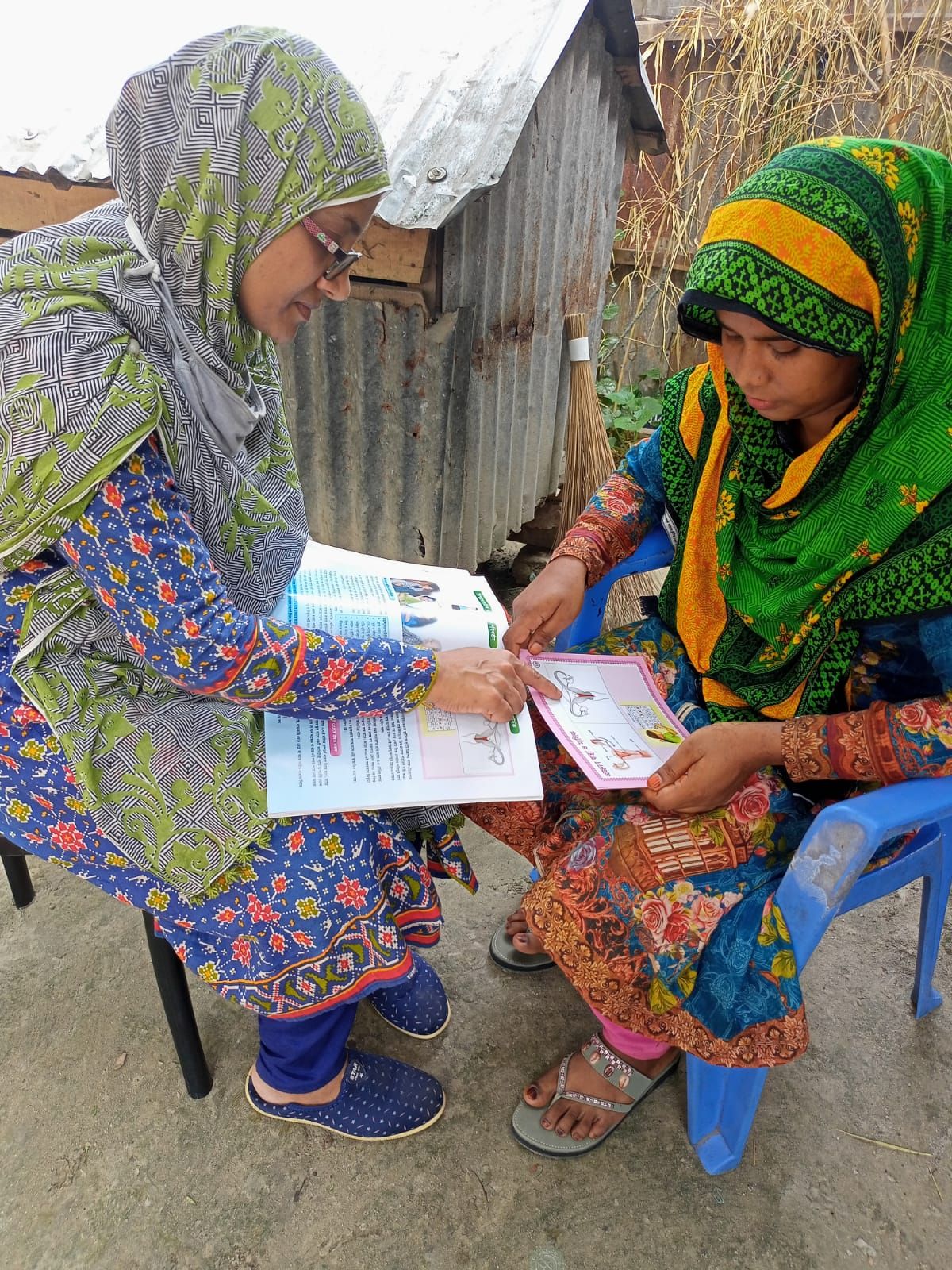
Health Leaders
Women from microfinance and savings groups are trained in preventative and primary care and equipped as community health educators – known as Health Leaders – delivering practical knowledge and services within the families in their communities. Each frontline Health Leader typically reaches 150-200 families and generates income through her role, integrating health leadership into her livelihood.
Health Entrepreneurs
Community pharmacies, drug shops and small clinics – the providers low-income families already use – receive financing, including incentive-based financing, training and digital tools through partner financial institutions, to improve the quality and reliability of care available in their communities.

Health Finance Hubs
Affordable health financial products – health savings accounts, emergency medical loans, maternity wallets and community insurance – are co-designed with local financial institutions and the communities they serve. Financial products are combined with care navigation and health education. Health financial protection means that one health shock does not undo years of financial progress for low-income women and families.
Extending what already exists
Health Finance starts with an advantage most health programs do not have: an existing network of locally-based financial institution partners already trusted by and serving low-income women and families across Asia and Africa. These organisations are already reaching the communities we support at scale with financial services. Health Finance layers health into that network, rather than building distribution from the ground up.
Partner financial institutions have existing branch networks, staff and infrastructure that make health program delivery cost-effective; they co-invest in program design and delivery, building ownership from the outset; they progressively take on a greater share of program costs as each initiative matures; and they sustain programs within their own operations beyond the grant period.
Because Health Finance layers onto relationships that already exist, the marginal cost of extending health coverage to an additional family is materially lower than any build-from-scratch alternative. This cost structure supports both value for money for funders and a credible path to financial sustainability for partners, who progressively take ownership of the program over the long term.
This model is built on Opportunity International's more than 50 years of microfinance experience. The same approach that demonstrated microfinance, agriculture finance and education finance for low-income families could be both impactful and financially viable has now been applied to health.
What sets the model apart
Pre-existing trusted relationship
Partner financial institutions already hold relationships with low-income women built over years – relationships that helped those clients build their livelihoods. Health programs are layered onto that trust.
A genuine financial product suite that's fit for purpose
Emergency medical loans, health savings accounts, maternity wallets, community insurance and care navigation – co-designed per market. This addresses a genuine gap: public health systems rarely reach low-income communities with accessible, affordable financial products for health, and commercial financial products are not designed for them or to meet health needs. Health Finance fills that space in partnership with local institutions.
Built on local leadership and sustainability
The model is designed with sustainability at its core, with full ownership by local partners over time, who increasingly fund health programs from their own operating budgets. Our model is not dependent on a central headquarters, a proprietary platform, or ongoing grant funding.
Working alongside public systems
Health Finance's programs address gaps between public health systems and the communities they aim to serve. This is complementary to government programs, not in competition with them. Elements of the Health Finance model have been adopted by local governments – for instance in India, a truck driver mutual insurance pilot was adopted by the local government. Health Leaders trained through the program have also gone on to be engaged within government health schemes.
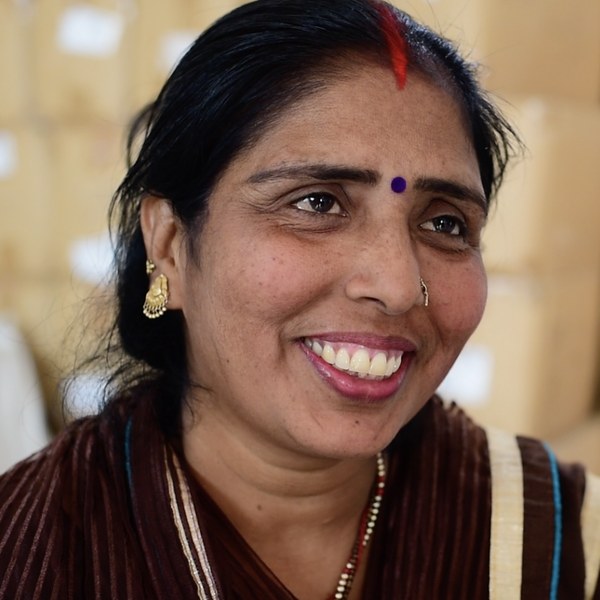
“Today my daughters can go to school every day of the month. My family is healthier, and so is my community.”
Designed to sustain, not dependent on perpetual grant funding
Sustainability is built into the model from design, not an afterthought at the end of a project cycle. Programs typically transition to full partner funding within three to five years.
Built on existing infrastructure
Health Finance does not build new institutions. We work with financial inclusion organisations – microfinance institutions, savings groups, community banks – that are already trusted by and serving the low-income women the program supports. Their branch networks, staff relationships and community presence are the infrastructure the program runs through. This makes expansion cost-effective and means the program is embedded in local structures that will still be there after grant funding ends.
Health Leaders – continuity from within
Health Leaders are women from the communities they serve, rather than outside professionals deployed into unfamiliar areas. They remain in their communities after the program funding period ends, continuing to apply and share the knowledge and skills they have built. This creates a layer of continuity that persists independently of the program funding cycle.
Partner co-investment
Local financial institution partners co-fund programs at around 20-40% of costs from day one, moving towards full ownership within five years. The program is designed with buy-in and ownership from day one, rather than as an externally managed project that is eventually handed over.
Earned revenue model
The Health Finance Hub model is designed to become operationally self-sustaining through income from health loan portfolios. Grant funding establishes each hub and builds initial scale; earned revenue increasingly covers operations as the loan book grows.
Demonstrated in practice
In Indonesia, Opportunity and financial inclusion partner KOMIDA worked together to build the foundations of the Health Leaders program. KOMIDA has run and scaled it from their own resources since 2023, showing how partner ownership can grow as a program matures.
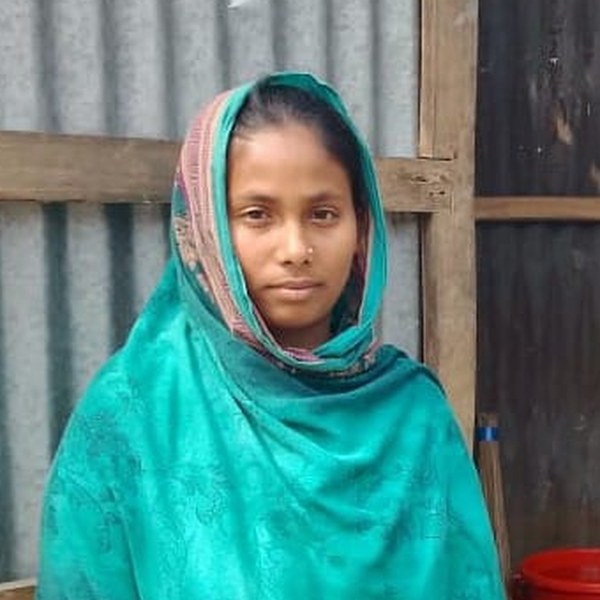
“My family no longer falls sick like before – we are now healthy. Good health brings happiness to life. My family is healthy, and I am happy now.”
Opportunity Health Finance is actively seeking partners interested in innovative, market-based approaches to closing the gap between health systems and the communities they are meant to serve.
Contact