
 Health Entrepreneurs
Financing the providers that low-income communities already rely on
Community pharmacies, drug shops and small clinics are often the first, and sometimes the only, point of care for low-income families. They are trusted, accessible, and already present where public health systems cannot reach. Opportunity Health Finance works to ensure they have the finance, tools and support they need to deliver better care.

The missing middle of primary care
In low-income communities across South Asia and sub-Saharan Africa, small private providers – pharmacies and drug shops – deliver the majority of day-to-day healthcare. Yet they operate almost entirely outside the formal financial system. Commercial banks view them as too small and too risky, and the existing financial products from microfinance institutions are not designed for the capital needs of a health business. Without formal bookkeeping or financial records, many providers cannot even access the finance that does exist.
Government and donor investment in health systems largely bypasses these providers, directing resources to the public sector only.
The result is a gap that is invisible to most health funders but deeply felt by the families who have no other options. These providers know their communities, they are trusted, and they operate at the last mile, yet they are often excluded from capital, training, digital tools and quality improvement systems.
Without appropriate financing, frontline health providers cannot maintain medicine stocks, invest in diagnostics, improve their clinical practices, or build the referral linkages that connect families to higher levels of care when they need it.
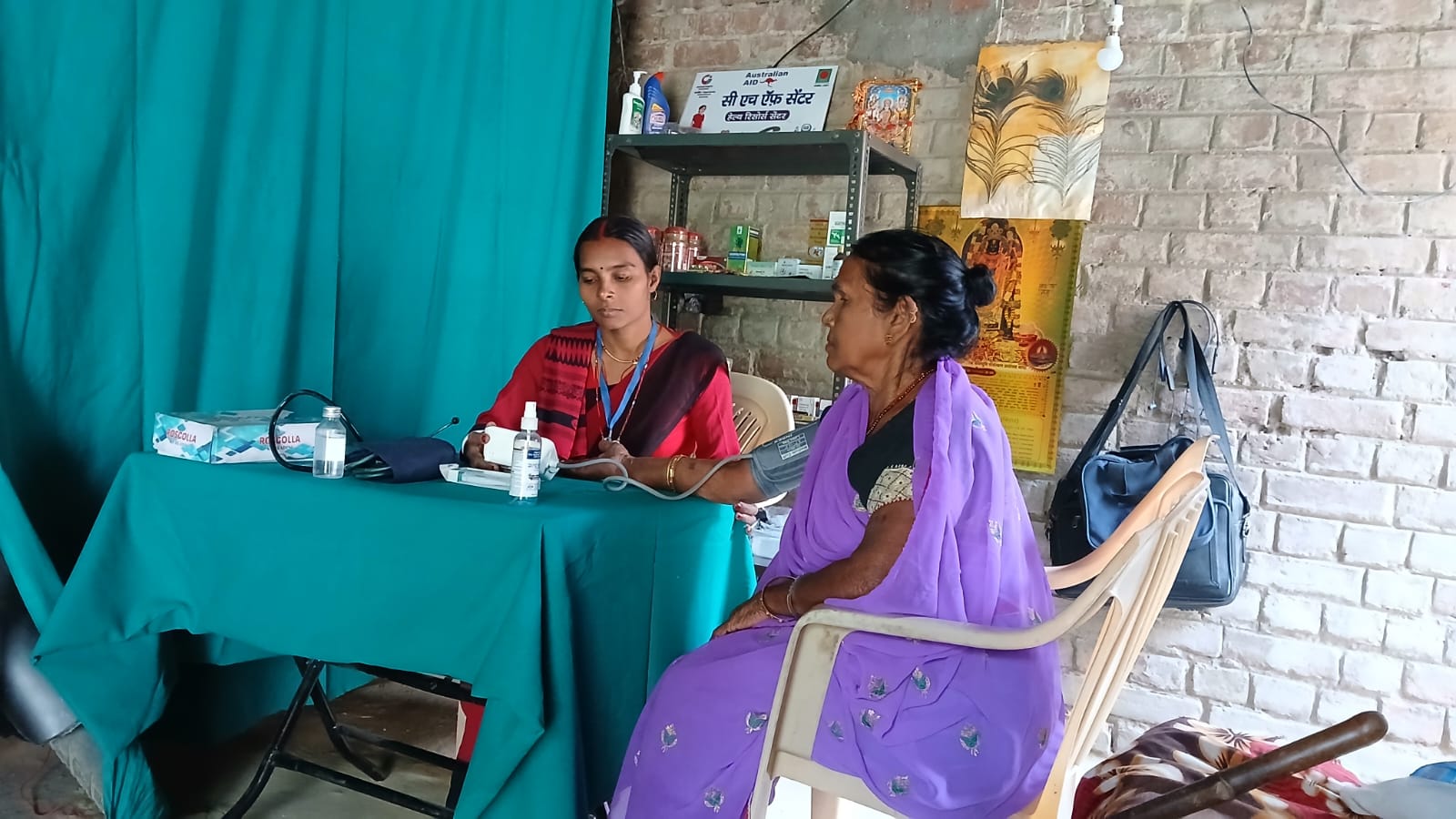
The majority of primary care in many low-income communities is delivered by small private providers – largely without appropriate finance, training or quality support.

“The health programs we observed in Bangladesh are eye-opening. We are ready to adapt this for Ghana.”
Incentive-based financing linked to health outcomes
What if we could incentivise these Health Entrepreneurs to provide better quality care and screening, while supporting these small, private sector providers to build thriving businesses?
Finance linked to quality
Opportunity Health Finance aims to support partner financial institutions to provide incentive-based financing and technical assistance to community-level health providers. Finance would be linked to quality improvement, supporting providers to offer better care, not just to grow their businesses.
Underwriting designed for health businesses
Loans need to be tailored to the working capital and investment needs of small health businesses and assessed using operational data and health outcomes, rather than the collateral-based criteria that exclude most small providers. Financing would be designed to encourage appropriate care-seeking, screening, referrals and continuity of care, rather than volume of consultations or medications alone.
Delivered through existing partners
The model is designed to operate through financial institution partners, leveraging existing community relationships and branch networks, to support the Health Entrepreneurs that low-income communities are already relying on.
Opportunity Health Finance is open to partnerships to improve care with the last mile providers already reaching low-income women and families.
Contact