
Climate-resilient health care starts at home: from warning signs to care
As COP31 puts resilient health systems on the agenda, how Health Leaders in Bangladesh help families spot dengue warning signs and get care early.
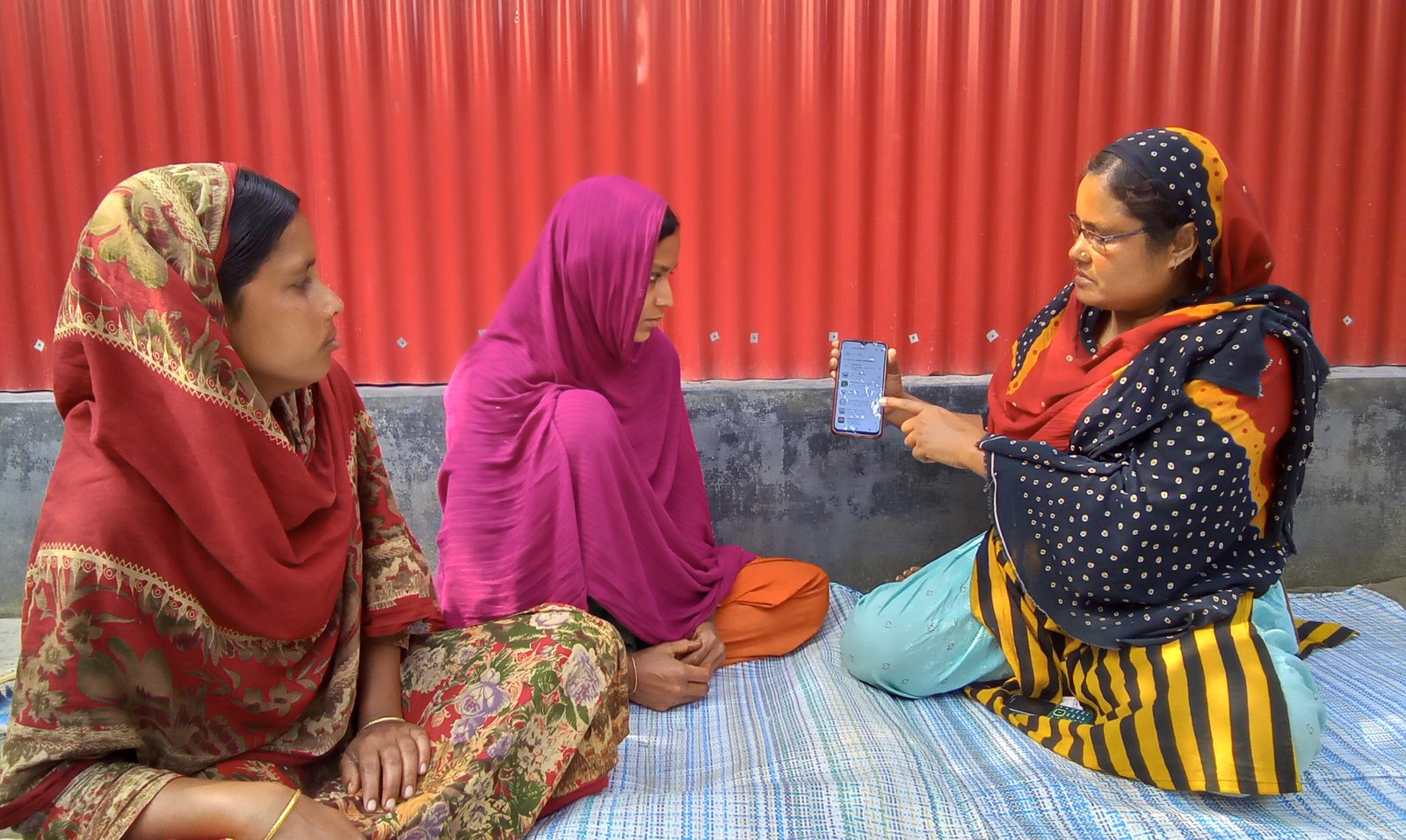
As world leaders prepare to meet in Antalya, Türkiye, for COP31, health is on the agenda from day one: a dedicated Health Day opens the conference on 9 November. Dynamic and resilient health systems are one of the COP31 Presidency’s ten priority themes (WHO). In Bangladesh, the links between a changing climate and health are already playing out in communities facing one of the country’s worst dengue seasons.
Bangladesh recorded its highest daily dengue count of 2026 on 25 October, with 2,249 new cases, taking the year’s total past 120,000 (DGHS via Xinhua, 25 October 2026). Low-income families in the country’s cities and rural villages alike have been hit. After the outbreak was declared, Opportunity Health Finance and its local partners in Bangladesh, Shakti Foundation, SAJIDA Foundation and BURO Bangladesh, along with CDOT in India, agreed a community response delivered through Health Leaders and mobile clinics.
That response was possible because the groundwork was already in place. Health Leaders already meet families regularly, partners already have the systems to reach them, and climate-related health risks such as mosquito-borne disease are already part of what Health Leaders are trained to teach.
Why is dengue a growing climate-related health risk?
Dengue is spread by Aedes mosquitoes, which breed in water collected in containers such as buckets, drums and tyres. Rising temperatures, high rainfall and humidity are increasing the risk of dengue spreading (WHO, 2025). Bangladesh’s 2026 season is running well ahead of last year, and transmission has continued past the June to September monsoon, when it usually peaks.
In India, dengue is no longer confined to the monsoon, and more than 120,000 cases were reported nationally in 2025 (Al Jazeera, June 2026). Dengue is also affecting communities served by our local partner CDOT, across Bihar and Jharkhand. For the families these partners serve, in India as in Bangladesh, a week of fever can mean lost income and a costly trip to hospital, which is why prevention and early recognition matter.
How are Health Leaders and our local partners responding?
Health Finance and its partners in Bangladesh agreed to take dengue prevention and warning-sign messages to communities through Health Leaders and mobile clinics, using a single set of materials so the advice stays consistent. In October, after the outbreak was announced, Health Finance held special meetings with its local partners Shakti Foundation, SAJIDA Foundation and BURO Bangladesh to agree the response:
- Community awareness through Health Leaders and mobile clinics. Health Leaders and the medical assistants who staff partners’ mobile clinics will share dengue prevention messages in their communities, look out for warning signs, and refer people into the public health system when they need care.
- Briefing frontline teams first. Partners will cover dengue in their internal staff meetings, so field teams can answer questions and repeat the same advice.
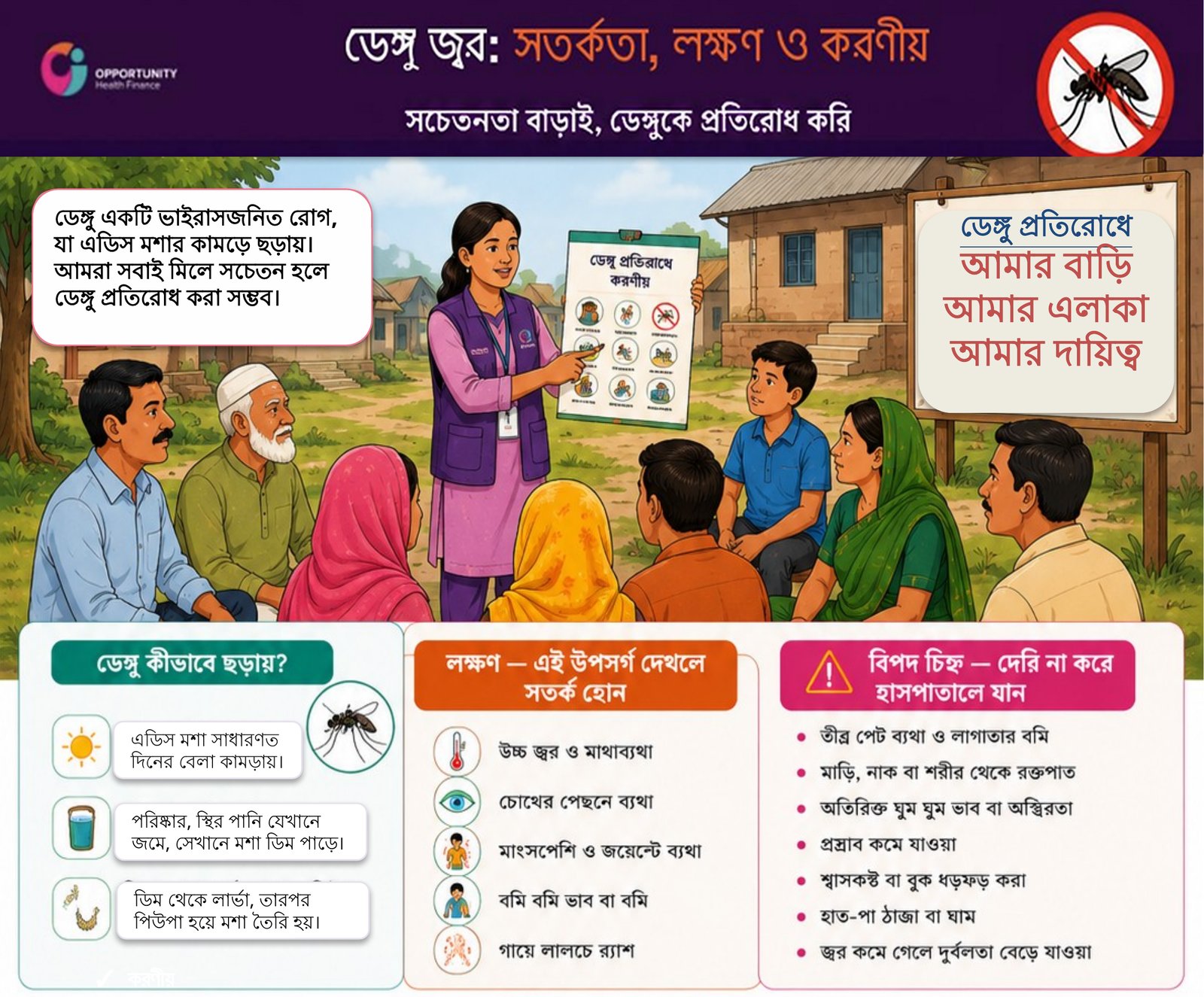
- One set of materials. Health Finance has shared a Bangla-language dengue awareness flyer, based on WHO guidance, with partners to share in the communities where they work.
The flyer is designed for the way Health Leaders teach: illustrated, built around a group conversation, and focused on a few practical actions. It covers three things. The first is keeping homes free of mosquito breeding sites, such as water in buckets, drums, pots, tyres and on rooftops. The second is recognising the danger signs early. The third is getting to care without delay, and avoiding painkillers such as aspirin and ibuprofen, which can increase the risk of bleeding.
In rural communities, the medical assistants who staff the mobile health clinics Health Finance supports with Shakti Foundation also provide care close to home, look out for dengue warning signs, and refer people into the public health system when further care is needed.
In India, Health Finance also shared the flyer with CDOT, our partner in India, after learning that dengue was affecting the communities our local partner works in, and encouraged Health Leaders trained by CDOT to share the messages in the communities they serve.
How has Health Finance built climate into community health education?
Climate change is already shaping the health of the communities our partners serve, from more frequent flooding to the spread of mosquito-borne disease. Health Finance has developed a set of master modules on climate-related health issues, and these are now part of the Health Leaders curriculum our partners deliver across South Asia. This work is informed by a One Health approach, which recognises that human, animal and environmental health are connected.
The curriculum covers climate-related health issues including dengue, malaria, heat stroke, water-borne disease, hypertension during pregnancy, gestational diabetes and other pregnancy danger signs and mental health. For each, Health Leaders learn the early and danger signs, prevention, home care and when to seek care. The materials take a gender equality, disability and social inclusion approach, and each partner adapts them to national guidelines, local language and the health services available.
Much of the COP31 discussion on health will focus on national health systems and infrastructure. Resilience also has to reach the household, where families decide whether a fever can wait.
This is what climate-responsive care looks like at community level: prevention messages that reflect the risks families face now, and a trusted local network that can spot warning signs and connect families to care quickly when an outbreak hits.
Why does early care matter?
Most people with dengue have mild symptoms and recover within one to two weeks, but severe dengue can become an emergency quickly, and the danger signs often appear after the fever has gone away, just when families may think the worst has passed. There is no specific treatment, so recognising the signs and getting to care early matters most (WHO, 2025).
Government hospitals and clinics provide dengue testing and care, but for many families in the communities Health Leaders serve, the gap is less about whether services exist and more about whether people know about them, trust them, and can afford the travel and lost wages to use them. Too often, families wait until a fever has become an emergency, when care is harder to get and costs more.
The cost of waiting is stark. When Bangladesh’s Directorate General of Health Services reviewed 114 dengue deaths in 2025, it found that 81% of those who died reached hospital only after three or more days of fever, and more than half died within 24 hours of admission (DGHS death review, reported September 2025). Health officials again named late admission as the main cause of high fatality rates this year (IEDCR, September 2026).
Why are women at greater risk of dying from dengue?
Dengue is more deadly for women in Bangladesh, even though fewer women are diagnosed. In 2023, Bangladesh recorded the world’s highest dengue case fatality rate (0.52%), and women died at around twice the rate of men (0.74% compared with 0.37%), with low-income women aged 31–40 most at risk. Health workers interviewed for the study identified delayed care as the leading contributing factor (Sarker & Sumon, Open Forum Infectious Diseases, 2026).
The pattern has continued. In 2026, women have accounted for more than half of dengue deaths while making up fewer than four in ten reported cases (DGHS data, The Daily Star, August 2026). Doctors in Dhaka report that women often arrive at hospital late, and that pregnant women with dengue can deteriorate quickly and should be admitted immediately. The reasons are still being studied, but the pattern shows why it matters that Health Leaders are women reaching other women in their own communities, encouraging them to act on a fever early.
What do Health Leaders do to close the gap?
Health Leaders help close that gap. They live in the communities they serve and see families regularly, which puts them in a good position to notice when someone is unwell. They explain the warning signs in the local language and encourage people to seek care early at the nearest government facility. Health Leaders also refer families to government health services and work alongside government primary health care. The message is simple: don’t wait. A fever with any warning sign needs care immediately.
“Health Leaders are more than messengers; they are trusted community advocates who turn health information into action through their regular engagement with families. By equipping them with clear and timely information, we let our partners respond directly through the women these families trust and listen to in their communities.”
Find out more
Learn how Health Leaders educate their communities and connect families to care.
Frequently asked questions
What is climate-smart health education?
Health education that helps families prepare for and reduce the health risks of a changing climate, such as mosquito-borne disease, flooding and water-borne illness. Health Finance has developed master modules on climate-related health issues and integrated them into the Health Leaders curriculum, which partners deliver across South Asia.
What role do Health Leaders play in a dengue outbreak?
Health Leaders are women trained by local financial inclusion partners to lead community health education. In an outbreak they share prevention and warning-sign messages with the families they already work with, using materials based on WHO guidance, and encourage people to seek care early at government health facilities.
Why do more women than men die from dengue in Bangladesh?
Women in Bangladesh die from dengue at around twice the rate of men, even though fewer women are diagnosed (Sarker & Sumon, 2026). Researchers and health workers point to delayed care as a leading factor, alongside pregnancy-related risks and gaps in access to health services, though the causes are still being studied.
What is a One Health approach?
A One Health approach recognises that the health of people, animals and the environment are connected, so protecting one depends on the others. For Opportunity Health Finance's Health Leaders program, it means designing health education and care around the environmental conditions families live with, such as standing water where mosquitoes breed, floods that contaminate drinking water, and rising heat. It informs how Health Finance and its partners shape their programs, so that families can prevent illness as well as treat it.